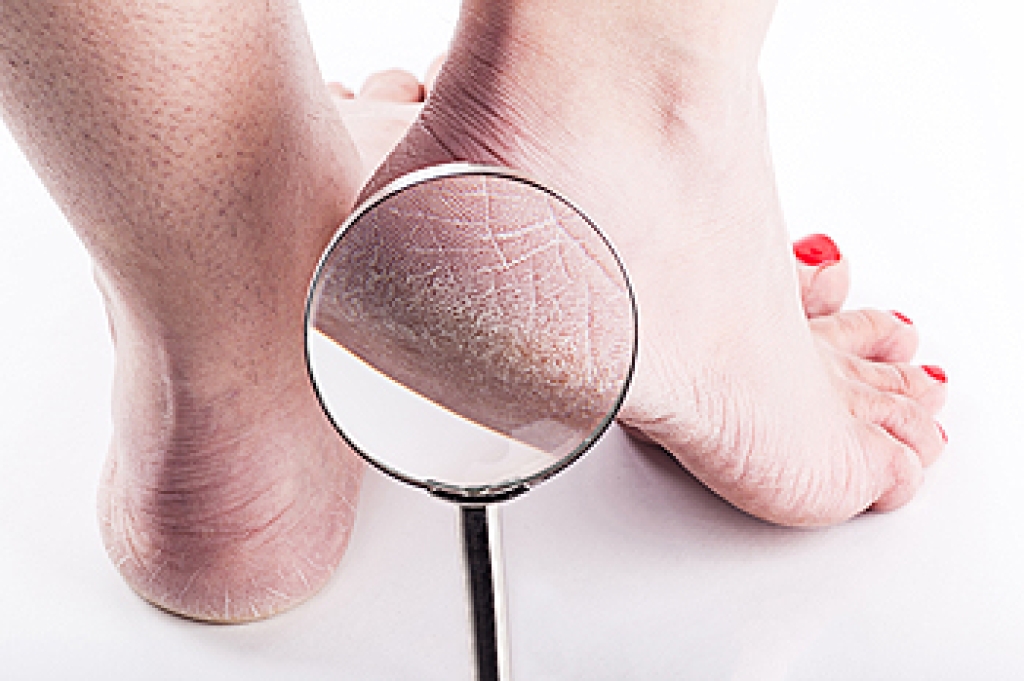
Cracked heels are a common foot condition that occurs when the skin on the heel becomes dry and thickened, leading to splits in the surface. This condition can range from mild dryness to deep fissures that cause discomfort and affect mobility. Without proper care, cracked heels may worsen and lead to pain during walking. Symptoms often include rough skin, flaking, and visible cracks along the heel. In more advanced cases, there may be redness, tenderness, and bleeding. Individuals may notice discomfort when standing or walking for extended periods of time, especially on hard surfaces. Common causes include dry skin, prolonged standing, and wearing open back shoes that fail to protect the heel. Vitamin deficiencies and dehydration can also contribute to poor skin health. Risk factors include obesity, aging, and medical conditions that affect circulation or skin elasticity. Relief focuses on restoring moisture, protecting the skin, and reducing pressure on the heel. Proper footwear and regular foot care can improve healing. If you have pain from cracked heels, it is suggested that you consult a chiropodist for effective relief and treatment solutions.
Cracked heels, also known as heel fissures, can cause pain and discomfort. If your cracked heels are bothering you, please consult with one of the chiropodists from Complete Family Footcare & Therapy. Our clinicians will assess your condition and provide you with quality foot and ankle treatment.
Dry, thickened skin around the rim of the heel is typically the first sign of cracked heels. While this condition is common and usually just a nuisance, some cases can be more severe. If left untreated and as more pressure is placed on the heel, the cracks become deeper and eventually walking and standing can be painful. These deep cracks or fissures can bleed and also become infected. Those with diabetes need to be especially careful as fissures could lead to diabetic foot ulcers.
Causes
Cracked heels can be the result of several different factors, including:
- Dry skin
- Taking long, hot showers or using harsh soaps
- Standing for long periods of time
- Walking barefoot
- Walking in shoes with an open back, such as sandals or flip flops
- Wearing shoes that do not fit properly
- Living in a cold or dry climate
- Certain skin conditions, such as eczema or psoriasis
Treatment
There are many at-home treatment remedies for cracked heels. Applying moisturizers to the heel can help hydrate the skin. Soaking your feet in warm water and exfoliating them with a loofah or pumice stone can help to buff away dead skin cells. If you are afflicted with cracked heels, it is recommended that you see a chiropodist for treatment.
Prevention
You can prevent cracked heels by:
- Avoiding standing in one position for prolonged periods of time
- Wearing well-fitted shoes with a closed back
- Washing your feet with gentle soaps and lukewarm water
- Moisturizing the feet daily
If you have any questions please feel free to contact our offices located in North York and Mississauga, ON .
