Items filtered by date: December 2024
Understanding the 4 Stages of Gout
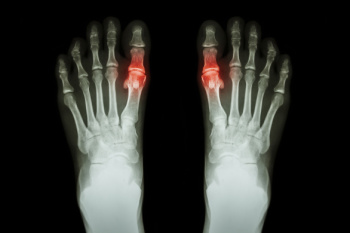
Gout is a form of arthritis caused by the buildup of uric acid crystals in the joints, leading to sudden and severe pain in the big toe and surrounding areas. The condition progresses through four stages. The first stage is asymptomatic hyperuricemia, where uric acid levels are elevated but no symptoms are present. The second stage is the acute gout attack marked by intense pain, redness, and swelling usually in the big toe. The third stage is interval gout, where there are no symptoms between attacks, but uric acid levels remain high. The final stage is chronic gout, where repeated attacks can lead to joint damage, kidney problems, and the formation of tophi, which are uric acid deposits. If you have developed gout, it is suggested that you confer with a chiropodist who can help you manage this painful condition.
Gout is a painful form of arthritis that can affect anyone. Please consult with one of the chiropodists from Complete Family Footcare & Therapy. Our clinicians will assess your condition and provide you with quality foot and ankle treatment.
What Is Gout?
Gout is characterized by sudden, severe attacks of pain, redness, and tenderness in the joints. This type of arthritis is caused by a buildup of uric acid in the bloodstream. When uric acid crystallizes in a joint, often the joint of the big toe, it can bring about a gout attack.
Symptoms
Symptoms of gout include:
Sudden and severe pain
Swelling
Redness
Warmth
Joint stiffness
Joint deformity
Diagnosis
A chiropodist will ask questions about your personal and family medical history, followed by an examination of the affected joint. Laboratory tests and x-rays are sometimes ordered to determine if the inflammation is caused by something other than gout. A sample of fluid taken from your joint can show whether it contains uric acid.
Treatment
Prescription medications or injections are used to treat the pain, swelling, and inflammation. Patients with chronic gout can also use behavioral modifications such as diet, exercise, and decreased intake of alcohol to help minimize the frequency of gout attacks. Foods and beverages that are high in purines should be avoided since purines are converted in the body to uric acid. If left untreated, this painful condition can leave your joint permanently damaged and swollen.
If you have any questions, please feel free to contact our offices located in . We offer the newest diagnostic and treatment technologies for all your foot care needs.
Ankle Pain Help

Ankle pain can stem from various issues, affecting movement and daily activities. Achilles tendinitis is a common cause, involving inflammation of the tendon that connects the calf muscles to the heel. Sprains occur when the ligaments supporting the ankle are overstretched or torn, usually from a sudden twist or misstep. Fractures, or broken bones, can happen from falls or high-impact injuries, causing severe pain, swelling, and difficulty bearing weight. Osteoarthritis is another frequent cause of ankle pain, as wear and tear over time can break down the joint cartilage, leading to stiffness and discomfort. If you have persistent or worsening ankle pain, it is suggested that you see a chiropodist for an accurate diagnosis and personalized treatment plan.
Ankle pain is a common symptom of many lower limb problems. If you are experiencing ankle pain, please consult with one of the chiropodists from Complete Family Footcare & Therapy. Our clinicians will assess your condition and provide you with quality foot and ankle treatment.
The ankle is composed of a number of muscles, bones, tendons, and ligaments. There are many conditions which may cause ankle pain.
Causes
Ankle strains or sprains
Achilles tendon injuries
Fractures
Bursitis
Arthritis
Gout
Tarsal tunnel syndrome
Symptoms
If you have ankle pain, you may also experience a variety of other symptoms depending on the underlying cause of the pain. Some of these symptoms may include ankle swelling, bruising, redness, numbness or tingling, instability, and difficulty walking.
Diagnosis
The underlying cause of ankle pain can be diagnosed by a chiropodist. Diagnoses are typically made based on your medical history, a physical examination of the affected ankle, and imaging studies such as X-rays.
Treatment
Treatment for your ankle pain will depend on its underlying cause. Often, the chiropodist will recommend that you rest the affected ankle. You might also need to ice, compress, and elevate the ankle, wear an orthotic device, or take medications to reduce pain and inflammation.
If you have any questions, please feel free to contact our offices located in . We offer the newest diagnostic and treatment technologies for all your foot care needs.
Common Causes of Thickened Toenails
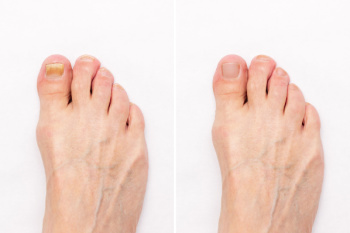
As people age, changes in toenail appearance, particularly thickening, are common due to several underlying factors. One primary cause of thicker toenails is slower nail growth, which allows layers of nail cells to accumulate, leading to a thickened appearance. Reduced circulation and the natural thinning of the skin also increase vulnerability to toenail issues. Conditions like fungal infections and psoriasis can become more prevalent with age, causing discoloration, brittleness, and thickening in toenails. Diabetes, which is common in older adults, affects blood flow and can lead to various thickened nails along with other foot problems. Even wearing tight shoes or experiencing minor toe injuries can cause nails to thicken over time. A chiropodist can evaluate the cause of your thickened toenails and provide treatment options, including trimming problem nails and managing any infections. If you notice dramatic changes to your toenails, it is suggested that you schedule an appointment with a chiropodist for guidance.
Toenail fungus can be uncomfortable and unsightly. If you have diabetes or a compromised immune system, it may also be dangerous. To learn more about treatment options, please consult with one of the chiropodists from Complete Family Footcare & Therapy. Our clinicians will assess your condition and provide you with quality foot and ankle treatment.
What Does Toenail Fungus Look Like?
A fungal infection of the toenail may cause the affected nail to become thickened, brittle, crumbly, and yellowish or brown in color. Sometimes the toenail may separate from the nail bed, become deformed, emit a foul odor, or cause pain or discomfort.
What Causes Toenail Fungus?
Toenail fungus is caused by a fungus that infects the nail bed. The fungus lives and thrives in warm and moist environments and is also contagious. Athlete’s foot, which is a fungal infection of the skin, may spread to the nails and cause toenail fungus.
What Treatments Are Available?
Potential treatments for toenail fungus may include oral antifungal medications, topical antifungal medications, such as medicated nail polishes that are applied directly to the affected nail, and laser therapy. Sometimes, a combination of treatments is prescribed.
If you have any questions, please feel free to contact our offices located in . We offer the newest diagnostic and treatment technologies for all your foot care needs.
Caring for a Painful Bunion
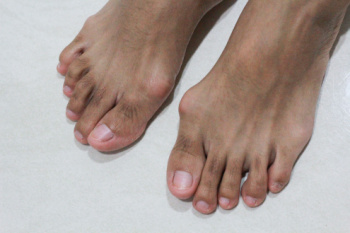
A bunion is a bony bump that forms on the joint at the base of the big toe, causing the toe to angle towards the others. This deformity develops gradually, often due to pressure from footwear, inherited foot structure, or medical conditions like arthritis. Bunions are most common in women and individuals with a family history of the condition, often aggravated by wearing tight, narrow shoes. A bunion looks like a noticeable bump on the side of the foot near the big toe and can be accompanied by redness, swelling, and soreness. Pain worsens with movement or extended standing, and the affected area may feel stiff. Treatment includes wearing comfortable, supportive footwear and sometimes orthotics. If you have a bunion that is painful, it is suggested that you visit a chiropodist for advanced care.
Bunions progressively worsen over time and may cause walking in your shoes to become difficult. To learn more about bunions, please consult with one of the chiropodists from Complete Family Footcare & Therapy. Our clinicians will assess your condition and provide you with quality foot and ankle treatment.
What Are Bunions?
A bunion is a bony bump that protrudes from the base of the big toe. Bunions are caused due to a misalignment of the first metatarsal. The characteristic bump of a bunion forms when the metatarsal shifts outwards from its proper position. Bunions develop slowly over time and progressively worsen without treatment. The skin over the bunion may develop calluses due to the friction from shoes. Eventually, a bunion can make walking uncomfortable or even painful. Bunions are one of the most common foot deformities and are especially common in women and older adults.
Symptoms
A bunion appears as a bulging bump on the outside of the base of the big toe.
The bunion may also:
Be swollen, red, or sore
Develop corns or calluses over it
Cause pain
Limit the big toe’s range of motion
Treatment
There are several different treatments available for bunions. Conservative treatment options include wearing shoes with a wider toe box, cushioning the bunion with a specialized pad, wearing shoe inserts, icing the bunion if it becomes inflamed, and taking medications to relieve pain. In more severe cases, more invasive procedures may be done. This may involve removing the swollen tissue around the bunion, straightening the big toe, realigning the bones at the front of the foot, or a combination of these procedures.
If you have any questions, please feel free to contact our offices located in . We offer the newest diagnostic and treatment technologies for all your foot care needs
Plantar Warts Can Be Treated!

Plantar warts are small growths that develop on parts of the feet that bear weight. They're typically found on the bottom of the foot. Don't live with plantar warts, and call us today!
